

The 4-3-2 fibre method 🧠
A simple way to build high-fibre meals, one plate at a time

Fibre is in a wide range of foods, but it’s not always obvious which ones are doing the heavy lifting.
Would you guess that one avocado, with its creamy texture, has around two to three times more fibre than a bowl of salad leaves - even though leaves feel more fibrous and crunchy?
That’s why I came up with the 4-3-2 fibre method, as a simple way to hit your fibre targets, one meal at a time.
An easy way to know you’re getting enough to reach your daily fibre goals, without weighing or calculating every bite.
What we’ll cover today:
A quick refresher on high fibre foods
The 4-3-2 fibre method explained
A guiding principle vs. a hard rule
How to put it into practice with real meals
Highest fibre food groups
Fibre has an unfortunate reputation where it’s thought to only be found in dry bran flakes and brown wholemeal bread.
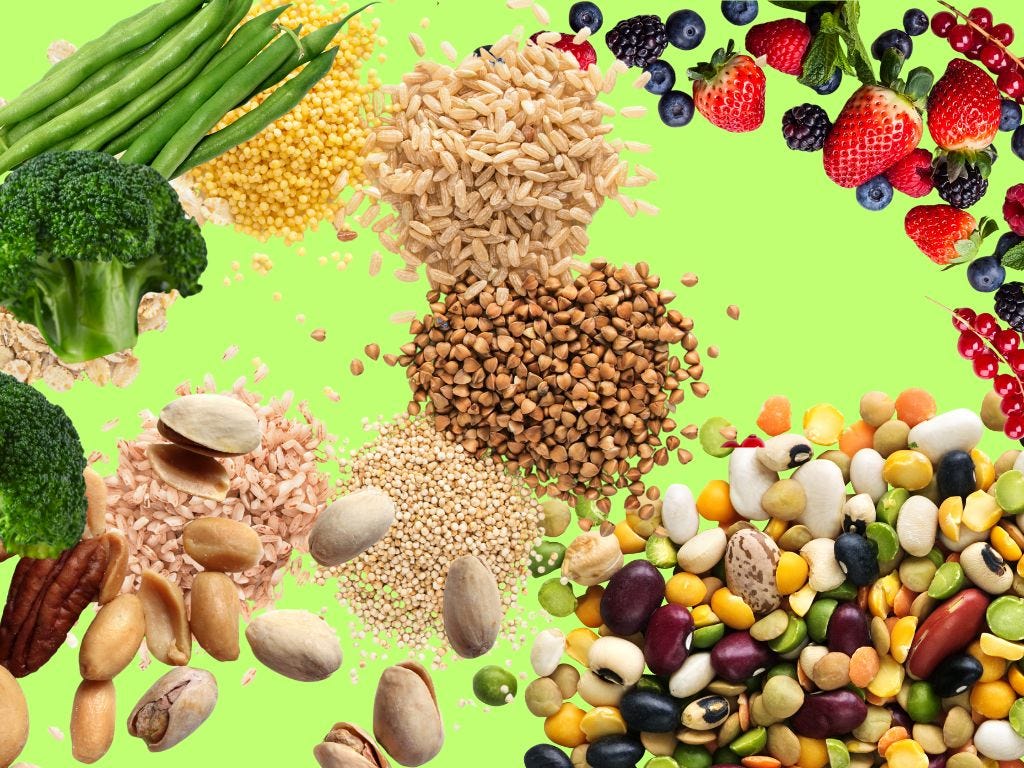
Instead it’s in most plant foods - fruit, vegetables, beans, lentils, whole grains, nuts and seeds.
And an easy way to remember the ones that pack the biggest fibre punch is to think of the BGBGs.
B-G-B-G-S:
B – Beans
G – Greens
B – Berries
G – Grains (whole grains)
S – Seeds (nuts and seeds)
And within those, whole grains, beans, lentils, nuts and seeds are the highest in fibre - which is why they form the backbone of the 4-3-2 method.
The 4-3-2 method
Think of this as your meal foundation, that you then add other foods to.
Using the 4-3-2 method as a base, you’ll get at least 10 grams of fibre in one meal, about a third of your daily target, without tracking or calculating.
The numbers are an easy visual guide for how much to include in one meal:
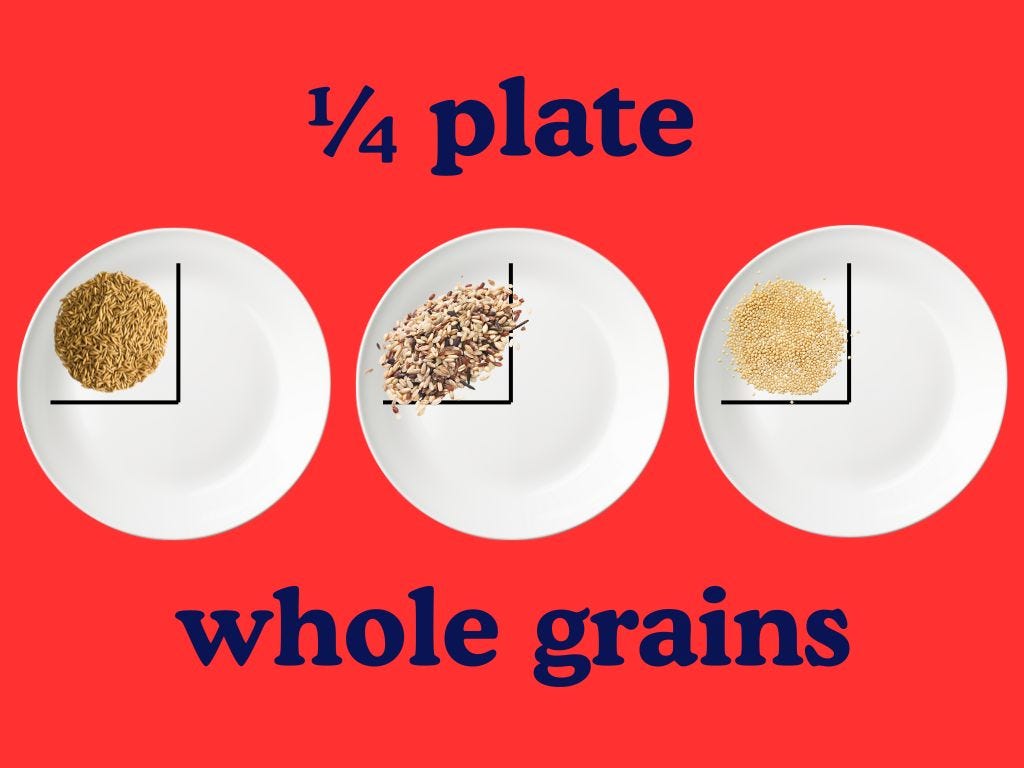
4 = a quarter
A quarter of your plate made up of whole grains.
3 = a third
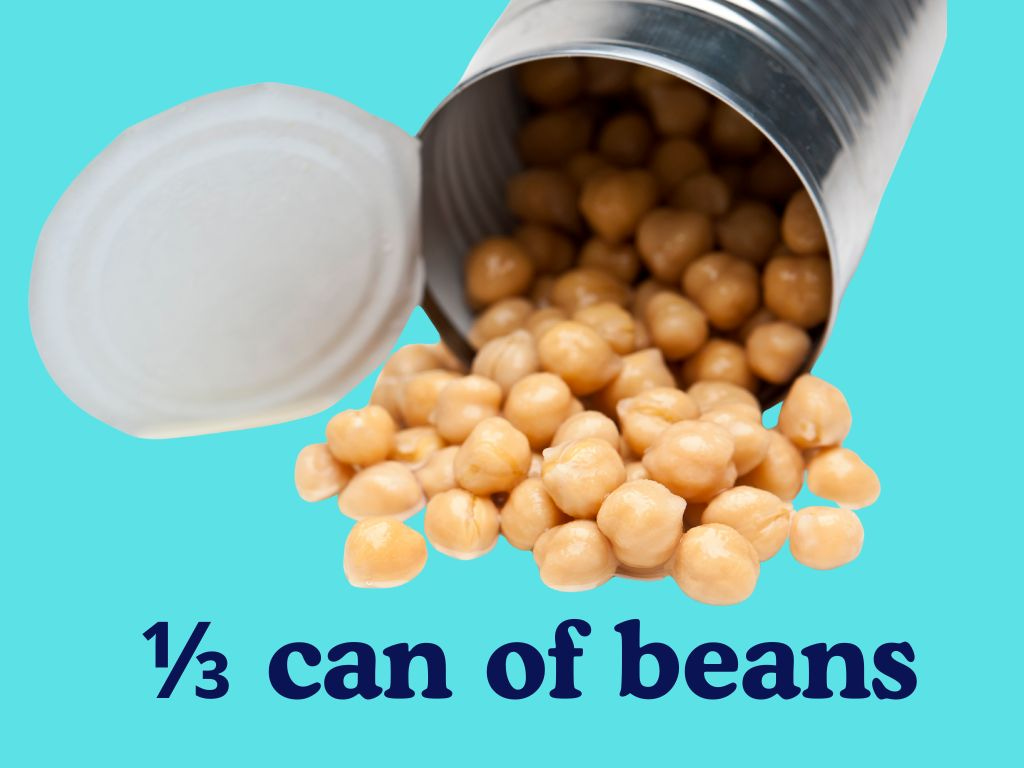
Add in a third of a tin of beans or lentils (about 80g).
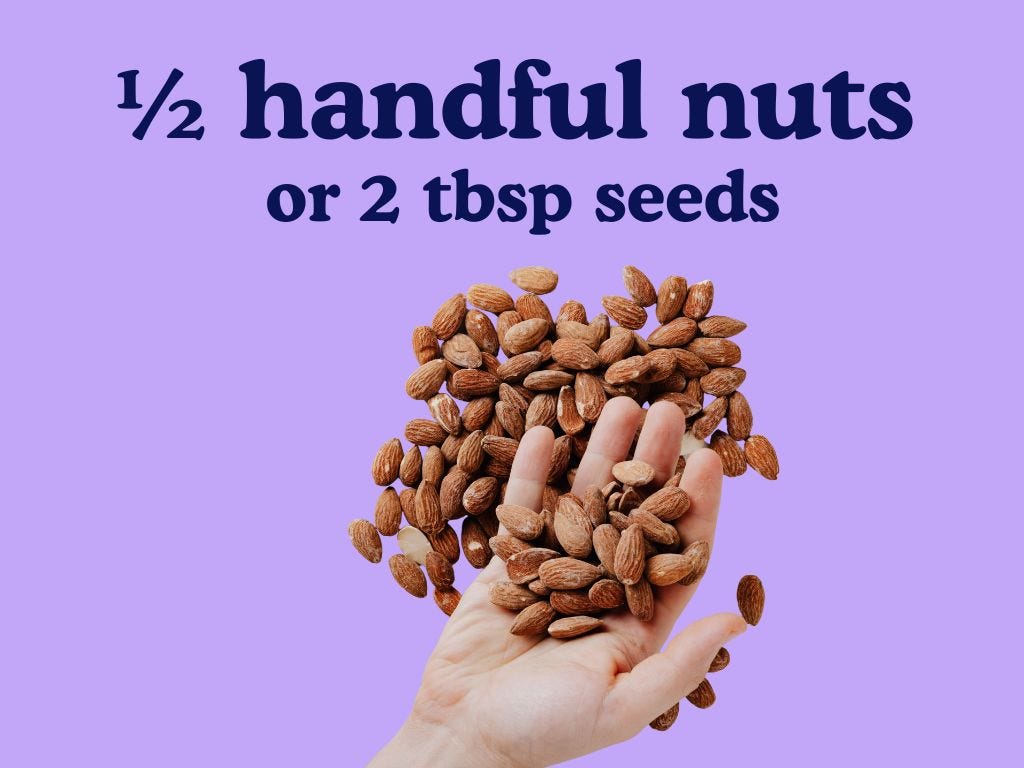
2 = two spoonfuls or 1/2 a handful
Scatter over either half a handful of nuts (about 20g) or two tablespoons of seeds.
Make sure to add your protein source, your veggies, some tasty fats, and whatever else you like to make it a balanced flavourful meal.
It’s a simple formula for creating fibre-rich meals that feed both you and your gut microbes.
If you’re new to fibre, it’s best to start low and slow - add in one at a time, and then layer on the other two from there.
Make it work for you
Do you have to eat beans, nuts, and seeds at every meal? Not at all.
The 4-3-2 method isn’t meant to fit every plate perfectly, you’re probably not adding beans to your sandwich or sprinkling seeds on your pasta (though you could).
But if you use it for just one meal a day, it’s an easy high-fibre win - a simple push towards meeting your 30g daily fibre goal.
Use it flexibly, in a way that fits your life. Over the week, it’s the variety that counts, not perfection at every meal.
Think of it as a guiding principle for most days - include a whole grain where you can, add beans, lentils, or chickpeas through the week, and finish with a small handful of nuts or seeds for crunch (or even just have some later as a snack).
And above all, keep it flavourful. Food is meant to be enjoyed, choose combinations that make sense in terms of flavour, texture, and what you actually like to eat. It shouldn’t feel forced.
How it looks in real life
A rice bowl with brown rice (4) and black beans (3), finished with a handful of toasted cashews (2)
A salad with quinoa (4) and chickpeas (3), with toasted sesame seeds (2)
A barley stew (4) with green lentils (3), and crushed walnuts (2)
Wholegrain couscous (4) and cannellini beans (3), with toasted flaked almonds (2)
A stir-fry with freekeh (4) and edamame (3), and toasted sesame seeds (2)
A spelt salad (4) with puy lentils (3), topped with sunflower seeds (2)
A thai curry with brown rice (4) and butter beans (3), and crushed peanuts (2)
These make up the base of your meal.
Then add your veggies, your protein (like chicken, fish, or tofu), and some tasty fats to round out your meal - such as avocado, crumbled feta and an extra virgin olive oil dressing. Don’t forget herbs and spices too for flavour.
Small, simple shifts that make a big difference to how you feel. Longer-lasting energy, better focus, mental clarity, and well fed microbes.
Chat soon,
Emily xx
Enjoyed this post? 🧡 and restack – it means a lot!
Emily, this is great.
What I love about this isn't just the nutritional advice, but the elegance of the system itself. You've taken a complex, abstract goal....."eat 30 grams of fiber".....which for most people requires a spreadsheet and a lot of willpower, and you've translated it into a simple, visual mental model for your plate.
It's the equivalent of giving someone a simple pre-flight checklist instead of asking them to redesign the airplane every time they want to fly.
It's a brilliant piece of nutritional UX/UI design because it dramatically lowers the cognitive load required to make the right choice. Really smart.
Dr Tom Kane
Love that you came up with this simple system to help everyone increase their fiber intake! That 1/3 of a tin of beans recommendation is spot on. Personally I just go by Canada's Food Guide: 1/2 the plate with veggies (on a bed of dark leafy greens), 1/4 of the plate with beans or bean products (the CFG calls it "protein foods" and they also say "choose plants more often," so I just go for beans), and 1/4 of the plate with whole grains. Plus a sprinkle of nuts and seeds. It's nicely pulled together in the Green Food Guide. The veggies also have a ton of fiber so even if I occasionally have non-whole grains, I am still getting more than enough.