

The supplement that actually works 🧠
A simple, science-backed guide to what creatine does for your muscles (and maybe your brain)

Creatine is one of the few supplements that actually does what people say it does.
It helps you get stronger, slows how quickly your muscles tire, and may even support your brain.
It’s also one of the most studied supplements we have.
Many of us don’t get much creatine through food alone, especially if you don’t eat a lot of meat or fish.
So understanding what creatine does, who benefits most, and how to use it has the potential to make a difference - at least when it comes to your exercise routine.
Here’s the simple version of what you need to know.
What we’ll cover today:
What creatine is
How it helps with strength
What we know about brain benefits
Is creatine safe? and what you need to know
Should you take it? and what matters most
What is creatine?
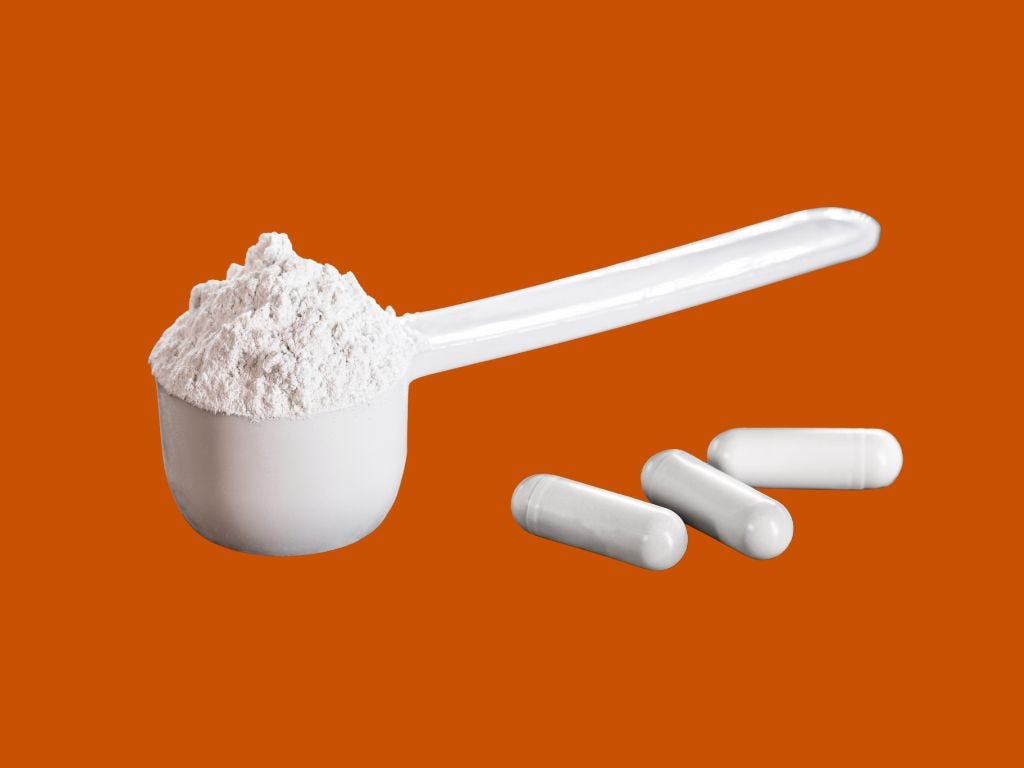
Creatine is one of the most researched supplements out there. It’s usually sold as an affordable white powder, but you can get it in tablet form too.
Most of what we know about its safety and effectiveness comes from studies on creatine monohydrate - that’s the form people typically use, and the one I’ll focus on here.
So what is creatine?
Creatine is a natural compound found in every cell in your body.
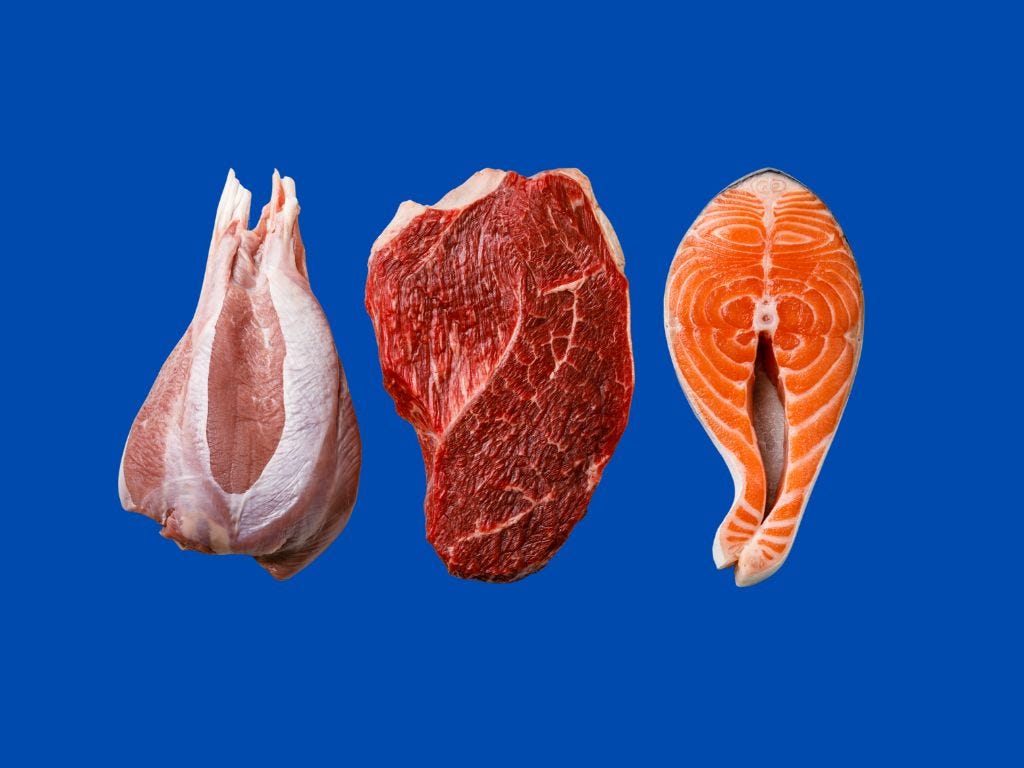
You make about half of what you need from amino acids in the liver and kidneys, and the rest comes from food. Meat and seafood give us roughly a gram a day, and we make about a gram ourselves. From there, creatine travels through the bloodstream to your muscles, where the majority of it is stored for use.
Its main job is to help your muscles produce quick bursts of energy by supporting ATP, the fuel your muscles use for powerful movements.
Population-level data suggests many people don’t get that much creatine from their diets, especially if they eat little or no meat. 69% of adults in the US eat below 1g of creatine a day.
Supplementing with creatine can give you far more than what you can get from foods alone. 5g of creatine supplement is the same amount as in 1.1kg of steak.
Creatine and getting stronger
Creatine can act as a training aid if you’re doing strength or conditioning workouts.
It helps boost muscular strength and can slow how quickly your muscles fatigue, so you can push a little harder.
The biggest improvements tend to happen if your baseline creatine stores are on the lower side - that’s where you’ll notice the most benefit.
There are two common ways to take it for muscle gains:
A loading phase: 20 g a day, split into four doses for up to a week, then drop to 3–5 g a day. Though this may cause bloating and diarrhoea for some.
Or you can skip the loading phase and just start with 3–5 g a day from the beginning for at least a month, and can be easier on the stomach for sensitive guts.
Both methods end up filling your muscles’ creatine stores (by about 20%), it just depends on how quickly you want to get there.
Creatine and thinking better
Creatine doesn’t just work in your muscles - some of it also reaches the brain.
Your brain can make its own creatine, and for most people that’s enough to meet its basic needs. When you take creatine, brain levels can go up a little, but not as much as in muscle, and the response varies between people.
What does that mean for thinking?
A recent meta-analysis suggests creatine may give a small lift to things like memory and how quickly we process information.
Even so, across the wider research the results aren’t always consistent, and many of the studies are small or not very strong.
These effects seem most noticeable when the brain is under pressure, like during extreme sleep loss (like staying awake for 21 hours straight), and in people who start with lower creatine levels.
Most studies have focused on muscle, where it’s much easier to measure changes. The brain is harder to study, and we have far fewer good-quality trials to go on.
It’s sensible to be cautious here – creatine might help, but we can’t say that with confidence, so it’s worth treating any brain-boosting claims carefully.
Is it safe?
A big new review looked at 685 human studies to see how safe creatine is to take.
Overall, when taken in normal doses, creatine consistently comes out as safe.
The review found that creatine didn’t cause more side effects than a placebo in over 25,000 people.
Things like stomach upset, muscle cramps, and kidney measures were almost the same in both groups, and reports in major safety databases were extremely rare.

Should you take it?
When it comes to muscle gains, creatine is one of the best-studied supplements we have and is considered safe at recommended doses, but it’s not a magic fix. It works best when you’re doing some form of strength training, but it doesn’t replace protein or actual food.
The people who tend to get the biggest benefit are those who naturally start with lower creatine levels - often older adults, women, and anyone who eats little or no meat like if you’re vegetarian or vegan.
People with more fast-twitch muscle fibres (the ones you use for lifting and sprinting) often see bigger improvements in strength and lean mass too.
There are also early signs that certain health conditions, like long-COVID or neuromuscular diseases, might make the brain a bit more responsive to creatine, but that research is still unfolding.
Overall, for most healthy adults - if you do resistance training - creatine is one of the few supplements with genuinely solid evidence behind it.

Make strength training your priority
Creatine can help, but the real magic comes from the basics.
Moving your body, doing some strength work, sleeping well, a balanced diet and managing stress will always have the biggest impact on your health and how you feel.
Creatine then only adds to the progress you’re already making.
What actually counts as strength training? It doesn’t need to be complicated. Aim for two to three sessions a week to start.
That could be:
bodyweight exercises like squats and press-ups
a kettlebell or dumbbell routine
resistance bands
Aim for movements that feel challenging by the last few reps, rest, then repeat.
If you’re lifting or pushing something heavy-ish a couple of times a week, you’re already doing one of the most important things for your muscles, bones, and brain - creatine may give you a small boost on top.
Chat soon,
Emily xx
Enjoyed this post? 🧡 and restack – it means a lot!
I take it everyday it has definitely helped with my menopause.
At the tender age of 77, with a family history of Alzheimer's disease, I take creatine daily for my muscles and my brain. So far, so good!