

Electrolytes 🧠 helpful or simply expensive pee?
Three friends asked me this question during this week's heatwave

A quick hello to everyone who’s just joined Second Brain - whether through my new book Fibre Power, out last week, or my podcast conversation with Dr Rangan Chatterjee. I’m really glad you’re here.
If you missed the episode, catch up here:
Ooph, it’s the hottest week of the year so far in the UK (hotter than Ibiza, would you believe). As much as us Brits love to complain about our usual grey clouds and drizzle, intense heat is something we just aren’t built for. With zero AC, my Victorian flat is doing its best impression of a greenhouse.
Three different people this week have asked me the same thing - should they be drinking electrolytes to stay hydrated in this hot weather?
Do you actually need them? Or is it marketing dressed up as science?
What we’ll cover today
What electrolytes are and how they work
Do you actually need to take them? Marketing vs reality
Are they harmless?
How best to stay hydrated in this heat
Your DIY hydration drink recipe (paid subscribers)

What electrolytes are and how they work
Electrolytes are minerals that carry an electrical charge when they dissolve in your body's fluids - which is what lets your nerves fire and your muscles contract.
They’re also central to hydration, helping your body to hold on to water rather than letting it pass right through you.
Sodium: Controls fluid balance and helps your nerves and muscles work.
Potassium: Works with sodium to fire your nerves and keep your heartbeat steady.
Magnesium: Helps your muscles relax (not just contract), and is involved in hundreds of different reactions in the body.
Chloride: Works together with sodium to manage fluid, and helps keep your blood’s acid-base balance in check.
You lose a bit of all of these through sweat. The more you sweat, the more you lose, which is why you top them back up through what you eat and drink.
But essential doesn’t mean you need them by the sachet-ful.
Do you actually need to take electrolytes?
For most of us, no.
I’ve focused on the brands that suggest you take them daily for general hydration, rather than those marketed for post-exercise recovery. If you've run a half-marathon and sweated buckets, electrolytes become a different conversation.
When I looked at the labels, two things stood out:
They're wildly inconsistent despite all being sold as daily hydration. Some barely contain any sodium and are more like flavoured vitamin water, while others are properly dosed but only useful when you've actually lost a lot (intense exercise, or an upset stomach).
Most people don’t need them - you get enough from food, and most of the excess just gets peed out (sodium though is one to watch, and I’ll come to it below).
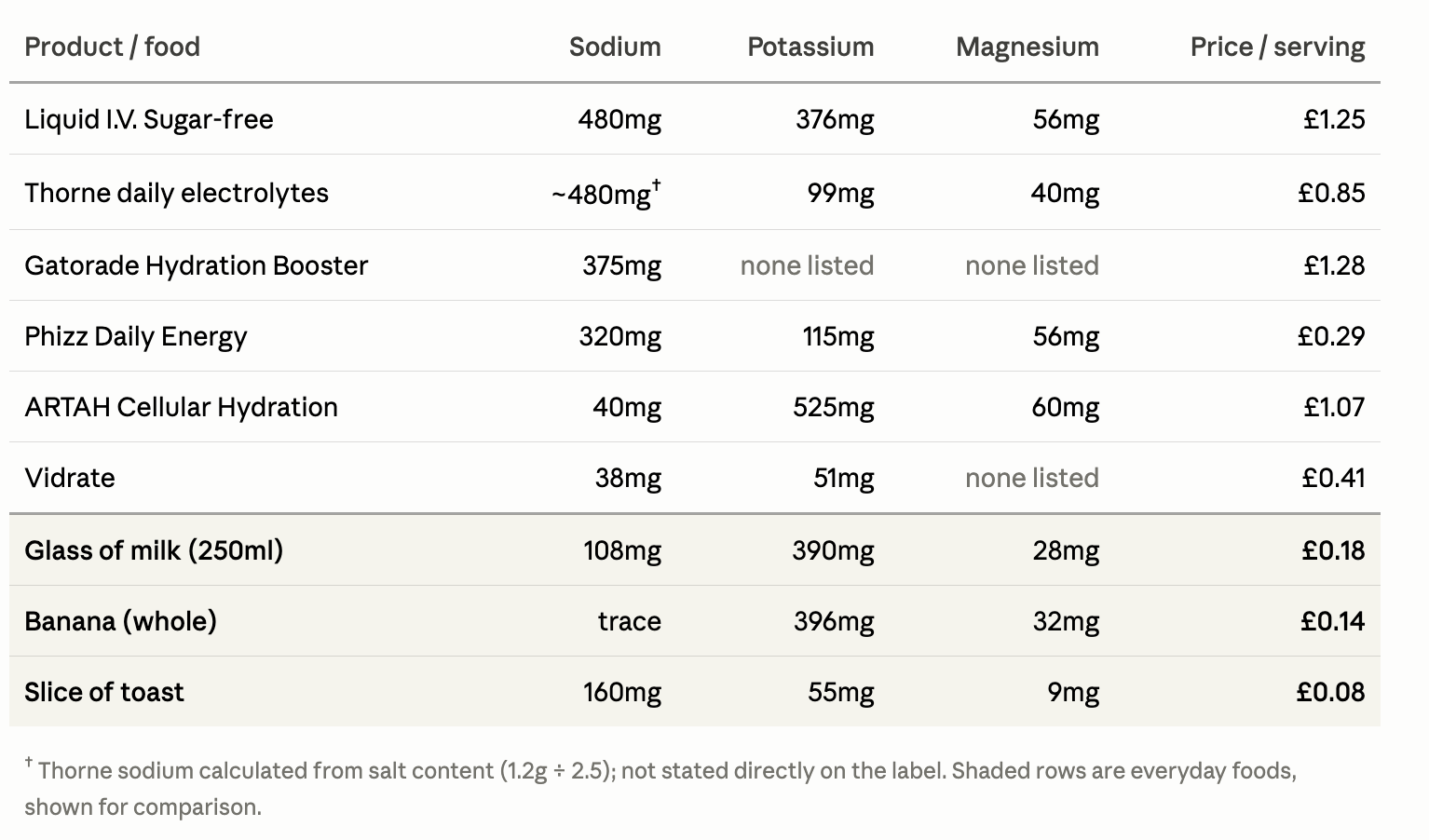
A slice of toast and a glass of milk gives you more sodium and potassium than the lighter, flavoured-water-style powders - at a fraction of the price. (The properly-dosed ones do pack in more sodium, which is exactly why they're not meant as an everyday drink).
The claims - true or false?
Marketing claims and fancy terminology can make electrolyte powders seem like a must have.
Here’s some of the main ones:
“Better hydration”: Drinking plenty of water is what hydrates you. Unless you’ve lost a lot of electrolytes during intense exercise, or had an upset stomach, you don’t need extra.
“More energy”: This is usually down to added B vitamins, which support energy metabolism. But unless you're deficient, topping them up won't make you feel more energetic. If you're tired all the time, the answer is almost never electrolytes, it's more likely sleep, food, your iron levels, or stress.
“Better recovery post exercise”: After a long, sweaty session, replacing lost sodium and fluid genuinely helps. After a gentle class or a walk, you haven’t lost enough to need it.
“Supports recovery from vomiting or diarrhoea”: Absolutely. When you’re ill, replacing lost fluid and electrolytes matters. But many of these aren’t dosed like a proper rehydration solution. If you’re genuinely unwell, a pharmacy sachet does the job better.
Is it harmless?
On average in the UK and the US, we are over-consuming salt, otherwise known as sodium chloride. It’s something I’ve written about before here:

Excess sodium pushes up blood pressure, which raises your risk of heart disease and stroke. So adding an extra daily dose on top of what you already eat (when you’re getting plenty as it is) is driving your sodium intake up even further.
Electrolyte solutions are not meant to be a daily habit.
The properly-dosed ones make sense when you’ve actually lost a lot of electrolytes, like after a hard sweaty session, or an upset stomach, and not as routine.

How best to stay hydrated in this heat
On a normal day, drinking plenty of water is best.
A study in the American Journal of Clinical Nutrition compared 13 drinks for how well they kept people hydrated - milk and oral rehydration solutions (the kind you get from a pharmacy) held water in the body better than plain water.
So if you’re worried about staying hydrated in this heatwave, you could have a glass of milk, or salted nuts with a glass of water alongside.
Milk contains sodium and potassium, but its protein and natural sugars help too. They slow digestion down, so the fluid is absorbed gradually rather than triggering a quick trip to the loo.
If you want the practical version - how to make your own electrolyte drink for heavy sweat days, or when you’re unwell - it’s in the paid version below.
